Funky Philly Facades: Neighborhood Signs, Sages and Storefronts
September 9, 2026, 6 — 8:00 PM
In the 1930s, a nationwide push to modernize main street store facades was begun, encouraged by New Deal policies and the emerging popularity of streamline modern design. When the economy exploded after WWII, this design trickle led to a torrent of storefront modernization. Striking storefronts were constructed in every corner of mid-century Philadelphia, largely designed by
Register HereIn the 1930s, a nationwide push to modernize main street store facades was begun, encouraged by New Deal policies and the emerging popularity of streamline modern design. When the economy exploded after WWII, this design trickle led to a torrent of storefront modernization. Striking storefronts were constructed in every corner of mid-century Philadelphia, largely designed by mom and pop business owners and local contractors. Most architects ignored and dismissed such common man creation as “vernacular,” and “not really architecture.” This talk, excerpted from a book of the same name that is being published by Schiffer Books, tells the story of how Philly artisans used four ordinary materials–tile, stainless steel, neon and wall advertising–to create a distinctive storefront architecture.
Len Davidson is a PhD sociologist and Philly native who grew up in Oxford Circle. In 1979, after teaching at University of Florida and apprenticing at a neon sign shop, he returned home to Philadelphia. He searched the city for old neon signs which led to establishing a 40+ year neon design business, publishing Vintage Neon (Schiffer Books 1999), and opening the Neon Museum of Philadelphia in 2021.

The Stamp Act Crisis: Catalyst of the American Revolution
October 14, 2026, 6 — 8:00 PM
To help reduce the massive debt incurred during the French and Indian War, Parliament passed The Stamp Act in March of 1765. The North American colonies immediately protested through pamphlets, newspaper editorials, political cartoons, intimidation of tax collectors, and economic protest. Recognizing the negative economic impact of the resulting American Non-Importation agreements, Parliament repealed the
Register HereTo help reduce the massive debt incurred during the French and Indian War, Parliament passed The Stamp Act in March of 1765. The North American colonies immediately protested through pamphlets, newspaper editorials, political cartoons, intimidation of tax collectors, and economic protest. Recognizing the negative economic impact of the resulting American Non-Importation agreements, Parliament repealed the tax in May of 1766. This pattern of taxation, protest, and repeal would repeat itself over the next decade, giving rise to key arguments and rallying cries—such as “taxation without representation” and “government by consent”–that culminated with independence a decade later.
David R. Brigham was appointed Librarian and CEO of the Historical Society of Pennsylvania (HSP) in 2020. Prior to that he served for thirteen years at the Pennsylvania Academy of the Fine Arts as Museum Director and later as President and CEO. He has written and edited several books, and most recently published essays on the Stamp Act (American Philosophical Society, 2025) and the earliest art academies in the United States (Yale University Press and the National Gallery of Art, 2026). Brigham earned bachelor’s degrees in English and Accounting, summa cum laude, from the University of Connecticut, and an M.A. and Ph.D. in American Civilization from the University of Pennsylvania.
Iconic Places of Migration
November 12, 2026, 6 — 8:00 PM
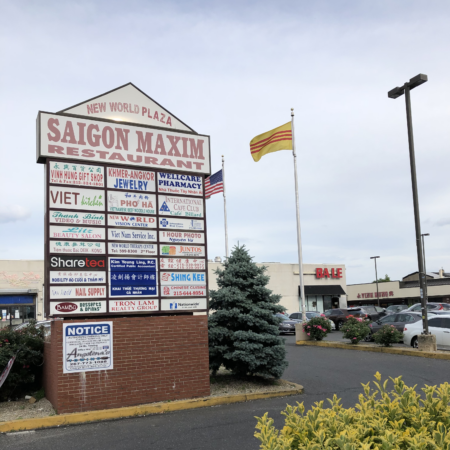
Migration to Philadelphia has produced iconic neighborhoods, commercial corridors, and monuments in various parts of our city and region, at different points in history. This talk will explore the formation, evolution, and preservation of places from Center City to South, Southwest, and other parts of Philadelphia, tracing the impacts of migrant communities on the city
Register HereMigration to Philadelphia has produced iconic neighborhoods, commercial corridors, and monuments in various parts of our city and region, at different points in history. This talk will explore the formation, evolution, and preservation of places from Center City to South, Southwest, and other parts of Philadelphia, tracing the impacts of migrant communities on the city and its built environment. We will examine the politics of inter-group relations, urban redevelopment and gentrification, cultural reproduction, from 9/11/2001 and multiple generations of Save Chinatown movements to the 9th Street Market, Washington Avenue, and Africatown.
Domenic Vitiello is Professor of City Planning and Urban Studies at the University of Pennsylvania. He has a past life in historic preservation but for over two decades has mostly worked with migrant community organizations in Philadelphia, Mexico, and Italy. He is former board chair of Juntos, board member of the African Cultural Alliance of North America (ACANA), and member of the Save Chinatown Coalition.

Special Guest: Brent Leggs, CEO of the National Trust for Historic Preservation
December 9, 2026, 6 — 8:00 PM
Brent Leggs is the eleventh President and CEO of the National Trust for Historic Preservation and has served in the role since 2026. Brent has been with the National Trust for over twenty years, most recently as the founding executive director of its African American Cultural Heritage Action Fund, which has raised over $200 million for
Register HereBrent Leggs is the eleventh President and CEO of the National Trust for Historic Preservation and has served in the role since 2026. Brent has been with the National Trust for over twenty years, most recently as the founding executive director of its African American Cultural Heritage Action Fund, which has raised over $200 million for the preservation of sites associated with Black history across the country.
Brent is a former Resident of the American Academy in Rome, Harvard University Loeb Fellow, 2018 recipient of the Robert G. Stanton National Preservation Award, and author of Preserving African American Historic Places, which is considered the “seminal publication on preserving African American historic sites” by the Smithsonian Institution.